
How to stop Micromanaging and Start Leading

Do you know anyone who likes to be micromanaged?
I imagine the answer is no.
As adults we like to make decisions, feel empowered and be trusted. Yet an astonishing 79% of people have experienced micromanagement at work. Why is that?
It can be hard to step away from the detail. Great leaders want great outcomes and have often risen through the ranks to be leaders because of their attention to detail, not despite it. They have never been encouraged previously to not have the detailed answers, so it has become a habit. Great leaders also understand they cannot do it alone, and their team success is paramount to achieving outcomes. Therefore, getting into the detail with their team seems the only way to ensure success.
But of course, it isn’t. Great leaders are able to empower their teams and hold them accountable for delivery. It sounds straightforward but putting it into practice is often far more challenging.
Is there team capability? Do you have enough resource? Do you trust your team? If you let go of the tactical detail, are you clear on what your strategic role should look like day to day? Not every situation is the same, so knowing when you should you step in, and when you should step back is crucial.
The Situational Leadership Model (Hersey and Blanchard) is a helpful way to think about when people might need more direction, and when they may need more space and autonomy. The model says leaders should choose from different leadership styles depending upon the situation and the person: Directing, Delegating, Coaching, and Supporting.
Instead of choosing between ‘fully involved’ or ‘fully delegated,’ decide the right level of leadership involvement by reflecting on the task, the people and the processes. Ask yourself these questions:
Consider the Task
Is this strategic or operational?
Am I focusing on detail because strategic work feels less immediate?
Is my involvement important or just familiar?
Would someone else benefit from owning this?
Does this require leadership involvement or leadership oversight?
What level of risk does this task/project carry and therefore how much do I need to be involved to manage that risk?
What is the consequence if this is done differently from how I would do it?
Have I become a bottleneck?
Consider the Person/The Team
How capable are they?
How confident do they feel?
How much experience do they have?
How much ownership do they want to take?
What is their development goal and how does this help them?
How could you support them to an outcome (the person/team) without directing?
Who could grow from leading this task?
What support would help someone succeed independently?
Consider the Process
Does this work involve multiple stakeholders or dependencies and how equipped is the person for this or how can I help them with these relationships?
Are decision boundaries clear? What decisions can be made confidently by others?
Will my continued involvement strengthen capability or weaken it?
Does this process genuinely require my involvement, or does it require clearer structure, trust, and support?
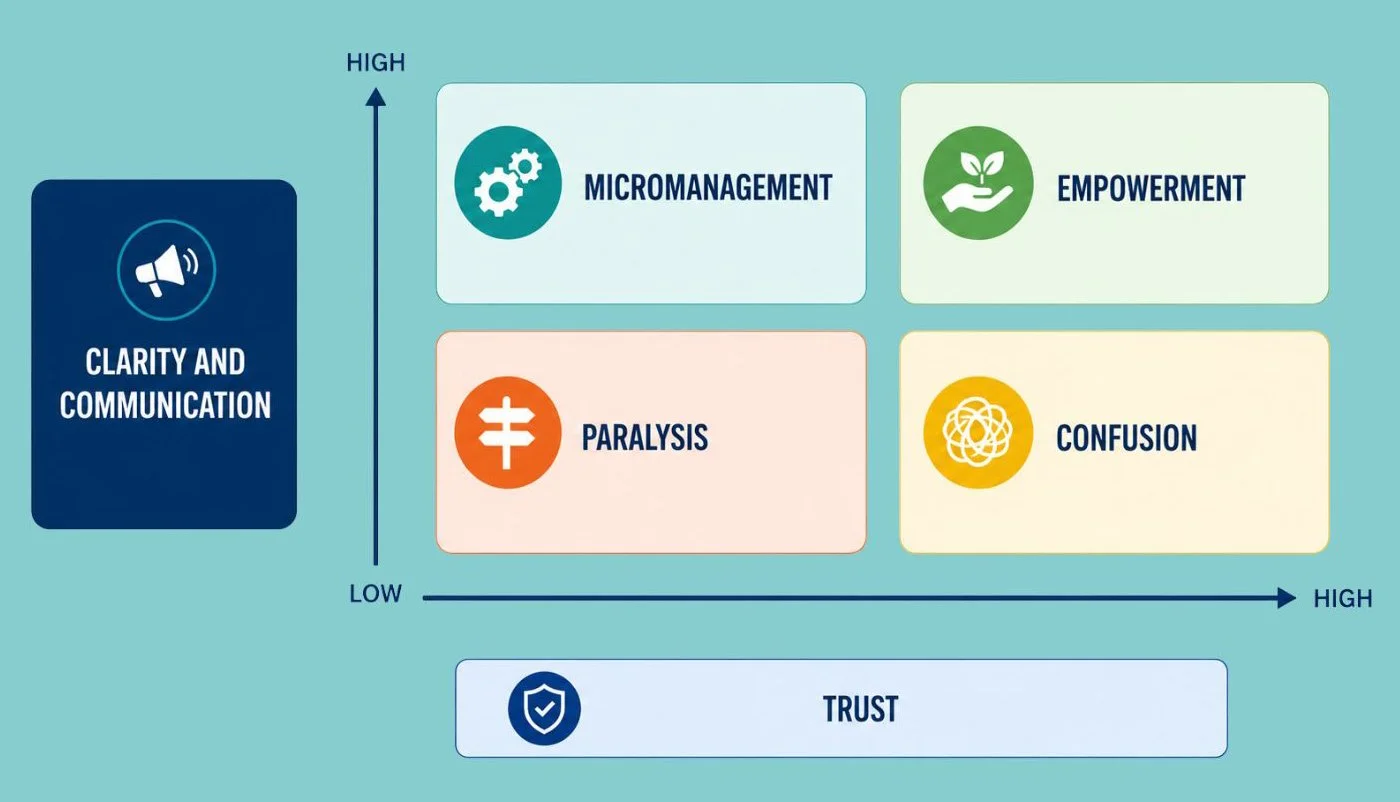
When you empower others the clarity of the ‘what’ (the outcome) is the secret to success. This only comes through great communication and clarity on both sides. No one can empower effectively in a communications vacuum. A simple diagram shows this visually:
If you would like to develop your leadership skills through coaching or training, then please get in touch. Our team have helped hundreds of leaders with their leadership journey. How to empower teams is a common topic in coaching. Contact us now.